Why sustainable travel matters in Costa Rica
I hesitated the first time I priced “eco” lodges in Costa Rica—some were genuinely conservation-forward, others just used the word as a markup. But here, sustainability isn’t a vibe; it’s tied to very real pressures: crowded park entrances, stressed water systems in dry-season beach towns, and wildlife that suffers when tours chase the perfect photo.
For a 7–10 day first trip without a car, your choices ripple fast. Picking regions with good shared shuttles and walkable hubs can cut emissions and keep you from burning half a day in transit. You’ll sometimes pay more per night or accept simpler comforts, but you gain time, fewer logistical failures, and a better chance your money supports the communities and habitats you actually came to see.
How to spot real sustainability (avoid greenwashing)
I got skeptical the moment every brochure started sounding the same: “eco,” “green,” “natural,” “authentic.” In Costa Rica, the fastest way to cut through it is to look for proof that costs money or limits volume—because that’s where greenwashing usually breaks. Real sustainability often means fewer rooms, capped tour sizes, and rules that make the operator’s job harder (no feeding wildlife, no baiting, no chasing).
Start with certifications, but treat them as a filter, not a verdict. CST (Costa Rica’s Certification for Sustainable Tourism) is a useful baseline; so are Rainforest Alliance-style programs and clear, published policies on water, waste, and energy. What works well: lodges that can tell you exactly how they handle sewage, refill stations, and laundry frequency. What doesn’t: “we love nature” with no details, or “private reserve” claims that are just a gated trail behind the pool.
Then sanity-check the logistics. If a place sells itself as eco but requires a two-hour private 4x4 transfer each way (because no shared shuttle reaches it), your footprint—and cost—climbs fast. I’d rather choose a simpler lodge near a walkable hub with reliable shuttles and spend the savings on one high-quality, small-group tour that follows wildlife ethics.
Most responsible regions and community-led destinations
The first real fork in the road is whether you want “easy without a car” or “quietest and least pressured.” For most first-timers, the sweet spot is choosing one inland wildlife base plus one beach hub, then committing to fewer moves. Monteverde works well for this: it’s compact, walkable once you arrive, and you can get there by shared shuttle from San José or Arenal without hiring a private driver. The friction is the last stretch of road—slow, sometimes bumpy—so even if it’s not far on a map, it can eat a good chunk of daylight.
If beaches are non-negotiable, I’d look hard at the Nicoya Peninsula’s smaller towns over the busiest central Pacific strip. Places like Sámara and Santa Teresa have plenty of “eco” signage, so the signal isn’t the adjective—it’s who benefits. Community-run surf schools, locally owned sodas, and tours that publish group caps tend to keep money circulating locally. What doesn’t work as well: rushing to Manuel Antonio as a default; it’s stunning, but the crowding pressure is real, and you’ll feel it in bottlenecked entry times and tour pacing.
For wildlife with a clearer community-led model, Tortuguero is a strong contender if you can handle the extra transit: boat access adds time and cost, but it naturally limits traffic, and many guiding operations are locally rooted. The practical trade-off is comfort and flexibility—humidity is relentless, plans hinge on boat schedules—yet it’s one of the few places where “slow travel” is almost built into the geography.
Low-impact lodges, tours, and wildlife ethics
I remember pausing at a lodge booking page that promised “immersive rainforest luxury” and realizing the only way to get there was a private 4x4 transfer plus a late-night check-in. For a no-car trip, that’s usually where “low impact” quietly breaks: the harder a place is to reach by shared shuttle or public bus, the more you end up buying individual transport (and burning time) to make the itinerary work.
When I’m comparing mid-budget lodges, I look for constraints that cost them revenue: fewer rooms, no daily linen changes by default, visible refill stations, and a straightforward answer to “where does wastewater go?” Certifications like CST help as a first pass, but the stronger signal is operational clarity—posted quiet hours near habitat, trail rules, and staff who’ll tell you what they won’t do (no wildlife handling, no playback for birds, no guaranteed sightings). If they dodge specifics, it’s usually not because they’re humble; it’s because the system isn’t there.
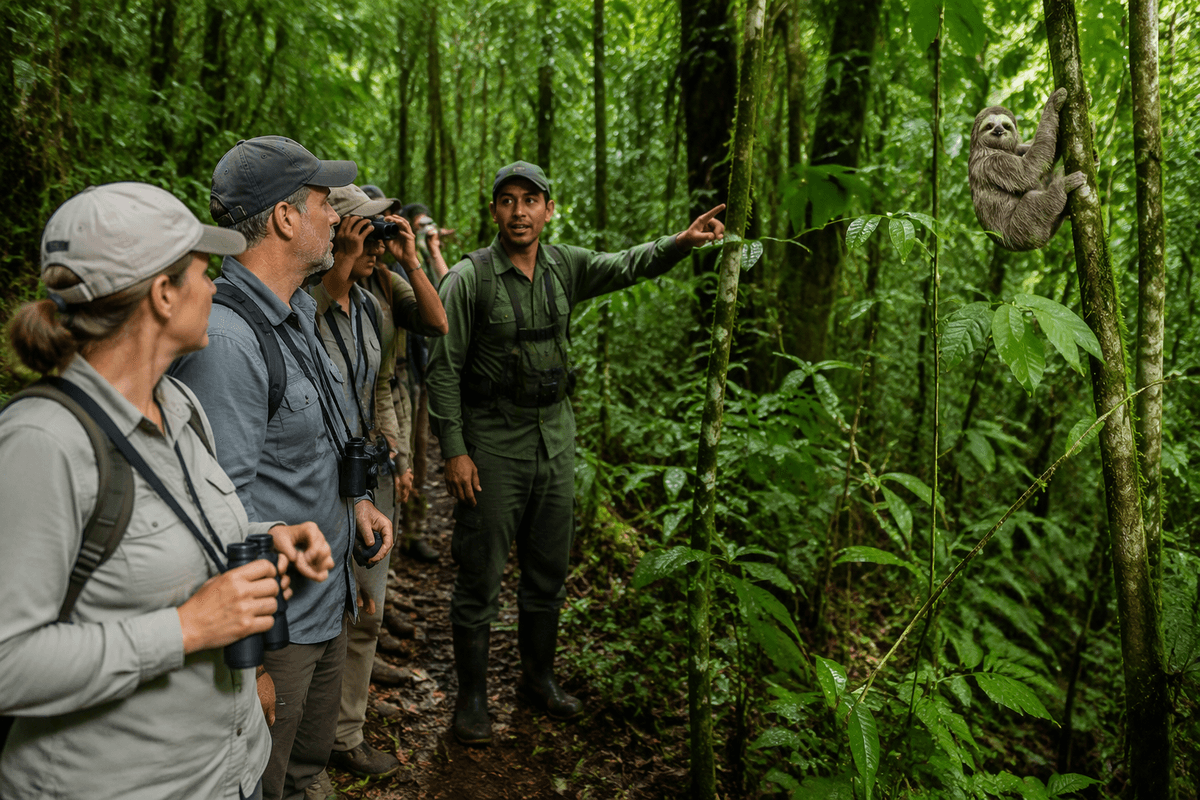
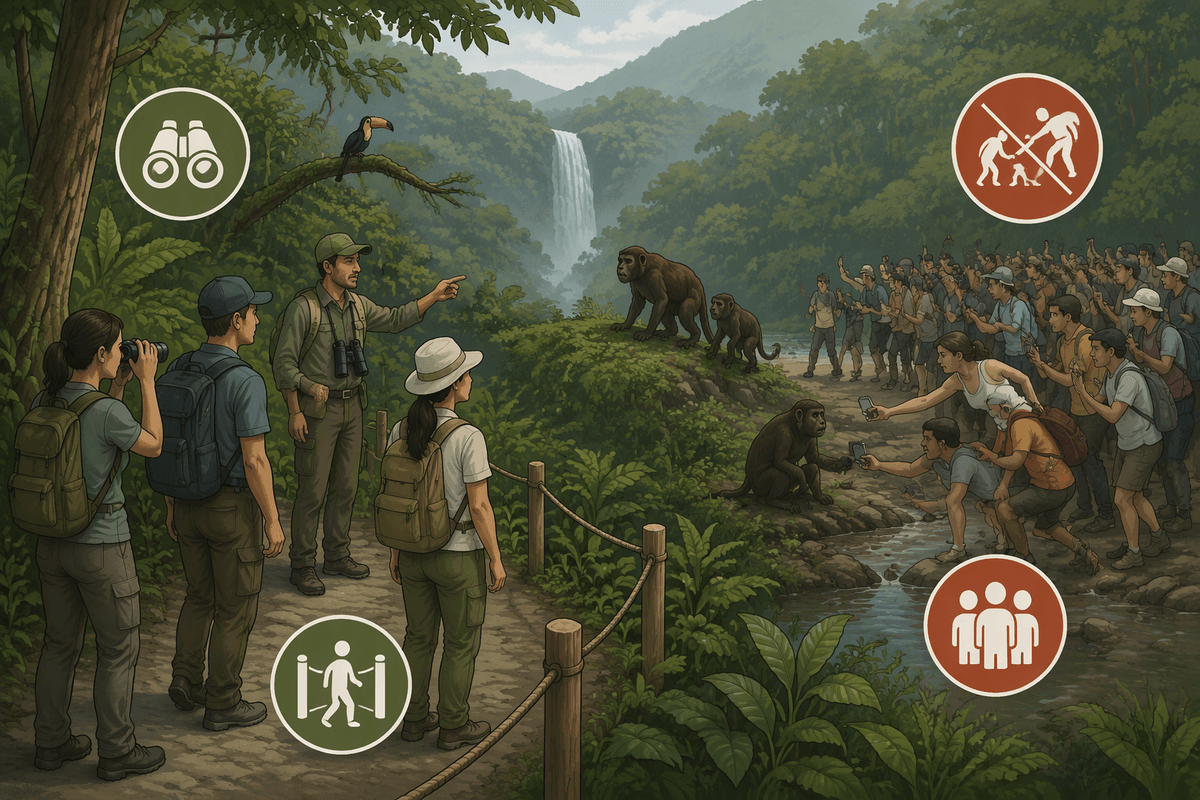
For tours, I’d rather pay a bit more once than “add-on” my way into damage: choose small-group guiding, avoid baiting (especially for sloths, frogs, and owls), and ask how close they approach animals and for how long. What works well is an early-morning walk with a naturalist who’s comfortable saying “not today.” What doesn’t: operators selling a packed schedule of sightings, because the pressure to perform often turns into crowding, stress, and shortcuts.
Transport, waste, and water: practical footprint cuts
The first friction point usually shows up on moving day: the “fast” option is a private transfer, but the low-impact (and often less stressful) option is bundling shared shuttles and staying put longer. If you’re doing two bases in 7–10 days, I’d rather accept one early start than stack three short hops that each require a dedicated car. Shared shuttles aren’t perfect—pick-up windows can be vague, and you’ll lose spontaneity—but they cut per-person emissions and force a cleaner itinerary.
On the ground, waste is where good intentions get noisy. Costa Rica is better than many places, but you’ll still see mixed bins and “recycling” that’s more aspirational than real, especially in smaller beach towns. What works: travel with a refillable bottle and actually use lodge refill stations; carry a small dry bag for snacks so you don’t accumulate single-use plastic during transit days. What doesn’t: assuming you can buy refills everywhere—some bus stops are basically soda-and-chips ecosystems.
Water is the stealth constraint, particularly in dry-season coastal hubs. The practical trade-off is comfort: shorter showers, reusing towels, and skipping daily laundry at humid beach properties. If a lodge can’t explain how they handle wastewater or asks guests to “save water” while running huge pools all day, I treat that as a signal—then spend my money somewhere more consistent.
Putting it together: trade-offs and trip-ready mindset
The last decision is usually emotional, not logistical: do you want to do more, or do you want each stop to matter? For a first 7–10 day no-car trip, I’d rather build around two bases and let the “eco” choices show up in constraints—shared shuttles, walkable hubs, and tours that cap numbers even when it costs them.
The truly low-impact lodge may be simpler, the ethical guide may say “no guaranteed sightings,” and the quieter beach town might mean fewer restaurant options. But the upside is reliability—fewer transfer dominoes, less time burned on roads, and less pressure to squeeze wildlife into your schedule.
If you’re unsure, use one rule: pay for quality once (a small-group naturalist tour), then keep the rest of your plan boring on purpose.