You’re car-shopping, and gas prices won’t sit still
It starts innocently: you’re on a dealer site late at night, toggling between trims, and the only number that feels “real” is the monthly payment. Then you stop for gas and the price is different than last week—again—and suddenly the fuel line item you thought you understood turns into a moving target. Even a careful budget gets fuzzy when your commute is fixed but the pump isn’t. You can feel yourself reaching for something more stable than “whatever gas costs next month,” especially if you’re trying to keep a tight ceiling on total monthly spend.
So the search shifts. EV listings start to look like a hedge, hybrids like a compromise, and gas cars like a gamble you might still take if the upfront price is right. The problem is you’re making a multi-year commitment using inputs that won’t hold still for even a full billing cycle.
Your expectation: the EV will be cheaper monthly
Once you start running the math, the EV pitch almost writes itself: electricity per mile is supposed to be cheaper than gas, and there’s no oil changes quietly stacking up. In a spreadsheet, it’s easy to translate that into permission to stretch on the purchase price—“the savings will cover it”—especially when the lender’s payment estimator shows only a small jump between the gas model and the EV you actually want.
But that assumption usually leans on a few fragile inputs. The monthly payment is locked to the deal you sign (APR, term length, taxes, insurance), while the “cheap to run” part depends on your miles, where you charge, and whether you’re comparing to today’s gas price or your own average over a year. If you’re budgeting with a hard cap, one mistake is letting uncertain operating savings justify a certain higher payment.
Reality check: charging turns into a lifestyle constraint
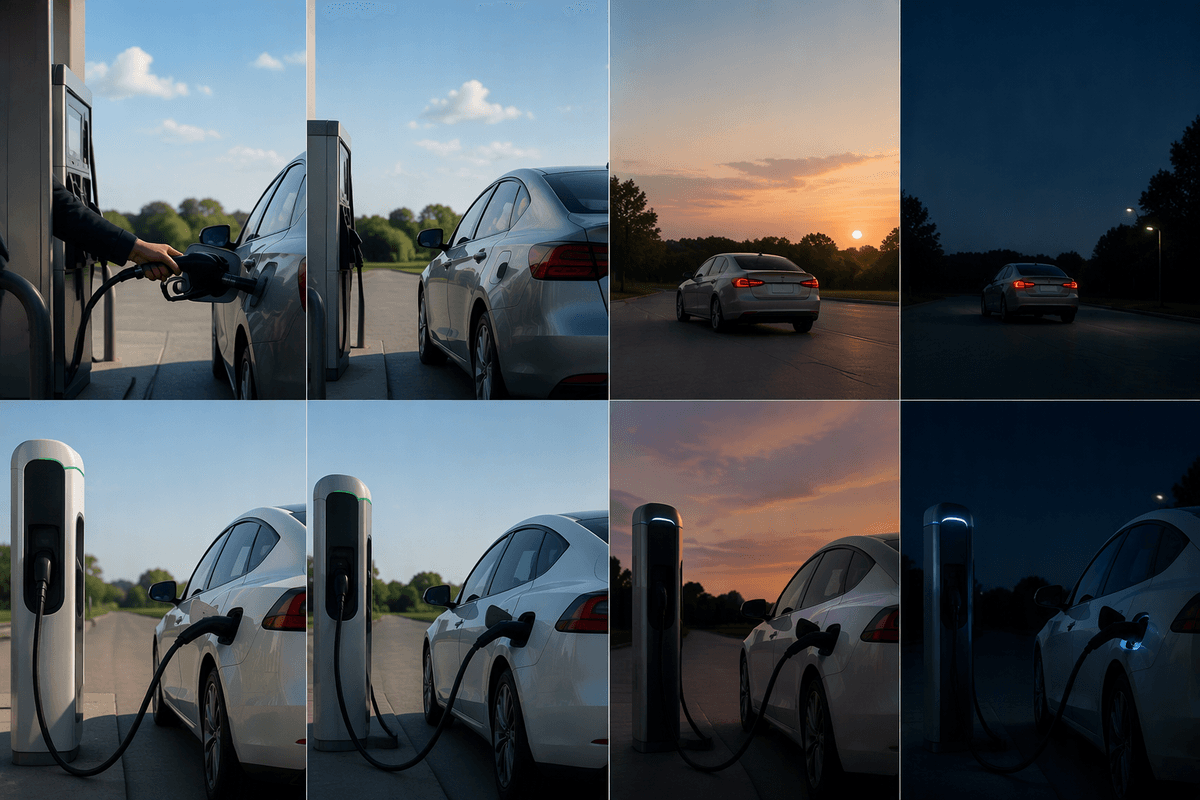
Then the spreadsheet hits the real world: charging isn’t a line item, it’s a routine. If you can’t reliably plug in at home, the “fuel stop” becomes a scheduled errand you feel during busy weeks. A 10-minute gas refill turns into thinking in windows—when the station is open, whether a stall is available, and how long you can sit there without it wrecking the evening. That’s when the EV stops being a pure cost play and starts behaving like a calendar constraint.
Even with home charging, the friction shows up in small, costly ways. Apartment rules change, outlets aren’t where you need them, and a Level 1 trickle can leave you short after an unexpected extra drive. Cold weather or highway-heavy commutes can tighten range enough that you charge more often than you planned, which pushes you toward public chargers. The practical question becomes less “what’s the cents-per-mile?” and more “what happens on the weeks when everything runs late?”
The bill surprise: electricity rates and fast charging
The first month or two can feel calm if most charging happens at home, because the “fuel” cost is hidden inside a larger electric bill. Then the bill lands and it’s not obvious what changed: a rate tier you crossed, a seasonal price shift, or simply charging at the wrong hours. If your utility has time-of-use pricing, plugging in right after work can be the expensive habit you didn’t realize you were building. The annoying part is that the car didn’t get less efficient—your schedule just collided with the rate plan.
Public fast charging is where the mental math really breaks. The per-kWh price can be high enough that a road-trip week, a broken home charger, or a stretch of cold weather quietly drags your “cheap EV miles” closer to hybrid territory. It also adds small transaction costs—apps, idle fees, pre-authorization holds—that don’t show up in the neat cents-per-mile estimate. By the time you notice, you’re no longer comparing EV vs gas; you’re comparing “mostly home charging” vs “accidentally living on fast chargers.”
The long view: battery aging and resale uncertainty
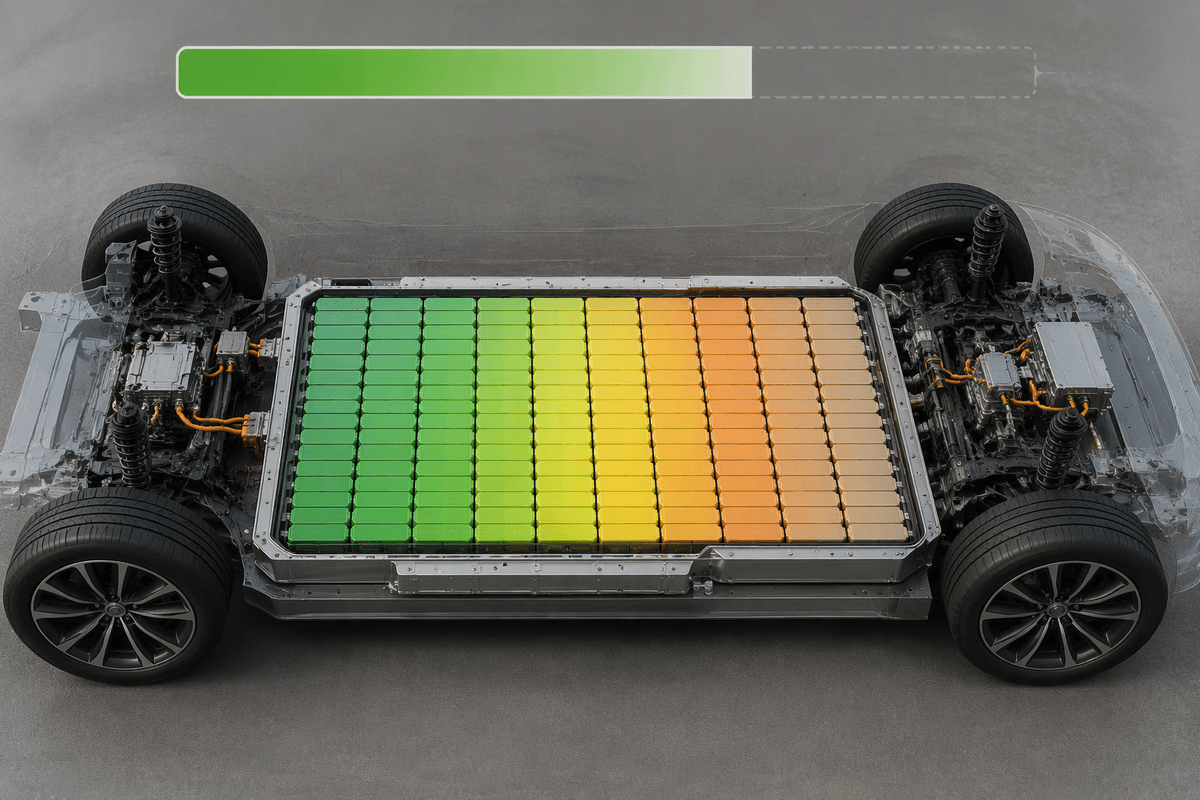
A few months in, the operating costs start to feel predictable—until the question shifts from this year’s bill to what the car is worth when you’re done with it. The battery isn’t just a component; it’s tied to range, charging speed, and the buyer’s confidence. Even if degradation is gradual, a small range drop can matter more than it sounds when you were already charging at the edge of a tight weekly routine. And if you live in a very hot or very cold climate, the worry isn’t theoretical—you’re watching efficiency swing and wondering what that means two summers from now.
Resale gets tricky because shoppers don’t price risk consistently. Battery warranties help, but they don’t erase the fact that used buyers ask different questions than new buyers. If newer models get meaningfully longer range for similar money, your car can look “older” faster than a comparable gas sedan. Leasing can fence off that uncertainty, but it also locks you into mileage rules and wear charges—so the long view becomes a trade: residual-value risk versus contract constraints.
A revised short list: EV, hybrid, or gas
By now the “best” choice usually isn’t a single model, it’s a short list that survives your worst weeks. The EV stays on the list if you can charge at home (or work) most days, your utility rate plan rewards overnight charging, and the extra payment still fits even if a month goes sideways and you lean on fast chargers. If that only works on paper, the savings aren’t really savings.
The hybrid tends to move up when you want cost stability without scheduling your life around plugs. It’s not immune to gas spikes, but it narrows the range of outcomes: fewer pump visits, less penalty for cold weather, and no “charger roulette” when plans change. The trade is more mechanical complexity and often a higher purchase price than the simplest gas option.
A straight gas car keeps making sense when the deal is meaningfully cheaper upfront, you drive fewer miles, or you need refuel-anywhere flexibility. The constraint is accepting that fuel is the variable you’re choosing to live with.
Make the call with a two-week reality test
Instead of deciding off a single spreadsheet, run a two-week “as if” test with your top two options. Map your real drives for 14 days, then price them twice: once assuming home charging at your off-peak rate, and once assuming you need two fast-charge sessions because life gets messy. If you’re considering leasing, layer in your expected annual miles and the cost of going over, because that’s a predictable penalty, not a maybe.
During the same window, rehearse the routine: where you’d plug in, what time you’d actually do it, and what happens on the late nights. If the EV only works when the week is perfect, it’s not a cost win—it’s a fragility tax. If the hybrid feels boring but keeps the plan intact, that’s information.