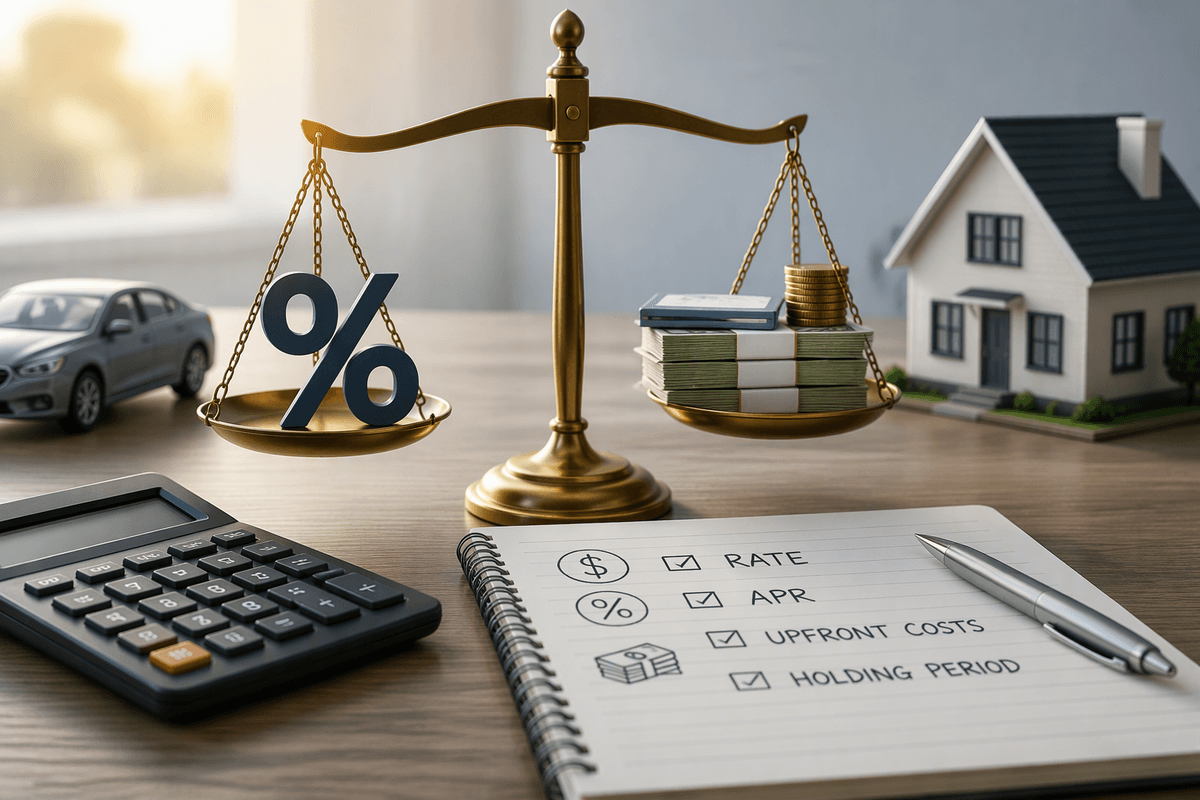
The rate looked great—then the APR shocked you
You open two tabs and start doing what everyone does: chase the lowest rate. One offer looks almost too clean—“6.49% fixed”—and it’s from a lender you’ve heard of. Then your eye catches a second number in smaller type: APR 8.12%. That gap feels like a bait-and-switch, but it’s usually just the math getting honest. The problem is you’re still deciding in real time, with a purchase deadline, limited cash for fees, and a spreadsheet that only has room for one “cost” column. The next step is figuring out what that second number is reacting to.
The interest rate is the price of borrowing the balance; APR tries to express the yearly cost after certain upfront charges are folded in. That’s why a loan with a “great” rate can show a higher APR once origination fees, points, or mandatory closing charges are spread across the amount borrowed.
The shock is biggest when the loan is smaller or you expect to refinance or pay early. The same $2,000 fee hurts more over three years than over thirty, so the APR climbs—even though the rate never changed.
When “0%” isn’t free in real life
The temptation is to treat “0%” as a shortcut and stop reading. On a card promo it might be 0% for 12–18 months, or an auto ad might say 0% with “qualified buyers” in the fine print. The friction shows up fast: a balance transfer fee hits immediately (often a few percent of what you move), or the dealer quietly removes the cash rebate if you take the 0% financing. You can feel the deal change without the headline number budging.
Then timing starts doing the damage. If the promo ends before you’ve cleared the balance, the remaining amount can reprice to a much higher variable APR, and the fee you paid at the start is already sunk. Even when the promo is legitimate, “0%” rarely covers the entire cost—only the interest during a specific window. The real question becomes whether the fee and the lost discounts are worth the breathing room you’re buying.
Which costs APR includes—and which it ignores
At this point the APR starts to feel like a referee: it steps in when the rate alone is flattering. For most installment loans, it can pull in certain finance charges tied to getting the money—origination fees, discount points, and some required upfront charges—then spread them over the loan term as if they were part of the interest. That’s why two lenders can both quote 6.49% and still land at different APRs once one of them wants 1–2% of the balance on day one.
But APR doesn’t catch everything that changes what you actually pay. Third‑party costs (appraisal, title, escrow, inspection, recording fees) often sit outside the APR even though they come out of pocket at closing. And it won’t “price in” choices you make later: late fees, penalty APR on cards, optional add‑ons in the finance office, or the discount you give up by taking the promotional financing instead of a rebate. So you end up with two buckets—costs that get annualized into APR, and costs that still need a separate line in your comparison.
Why compounding and timing change the annual cost
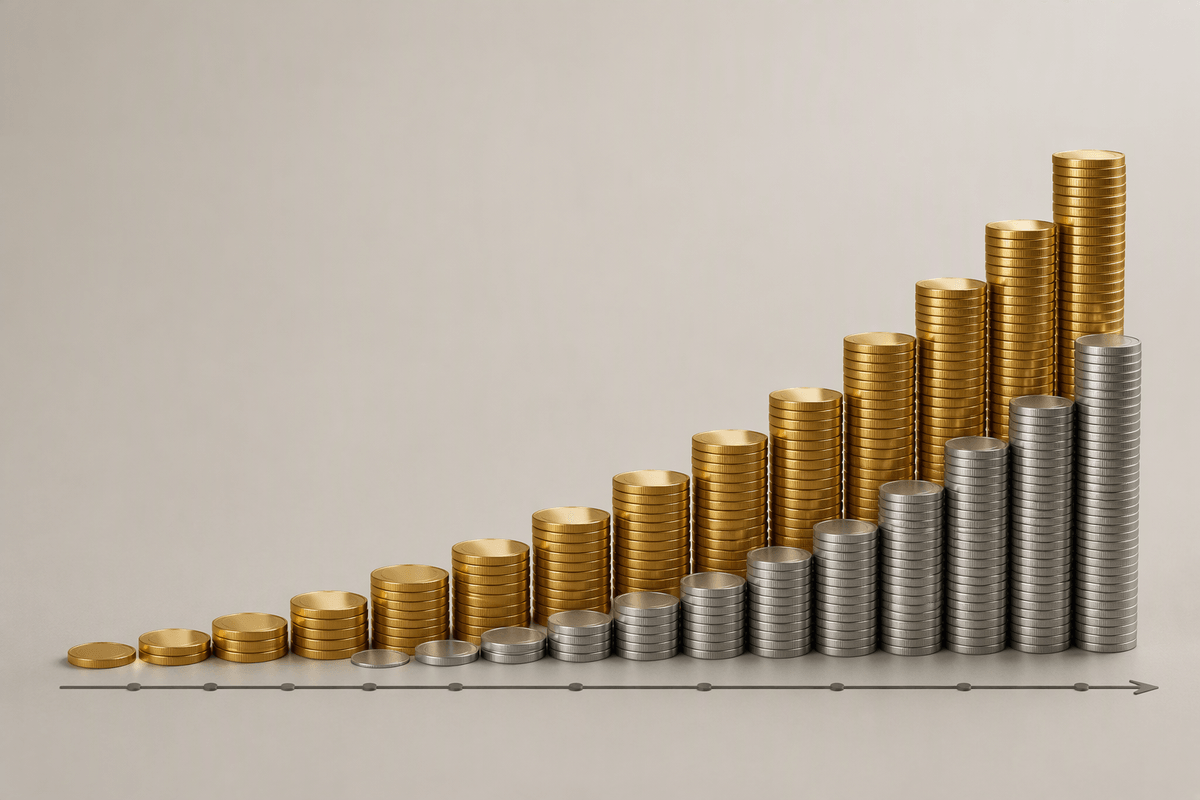
Once you’ve separated “in-APR” charges from the rest, the next surprise is that the calendar matters almost as much as the percentage. Interest isn’t usually added just once a year; it accrues daily or monthly, and the compounding schedule quietly changes the effective annual cost. Two products can share the same nominal rate and still land differently if one capitalizes interest more frequently, or if one uses a daily balance method that reacts immediately to a higher balance.
Timing shows up most when payments are uneven. A card balance that sits high for three weeks and drops right before the due date still generated interest for those days. On an installment loan, paying extra early reduces future interest because the principal shrinks sooner; paying extra late barely moves the needle because most interest has already been booked. That’s why “I’ll just pay it off fast” only saves money if “fast” happens early enough to outrun the way interest accrues.
APR tries to annualize, but it can’t fully reflect how you’ll behave—when you charge, when you pay, and whether you refinance. The closer your real payment timing matches the assumptions behind the disclosure, the more useful APR is. The further it drifts, the more you need to treat APR as a baseline, not a forecast.
Promos, teaser periods, and variable rates complicate APR
Now you’re staring at offers where the “real” price isn’t stable long enough for a single APR to feel definitive. A card might disclose a purchase APR, a balance-transfer promo rate, and then a much higher go-forward variable APR tied to an index. A mortgage disclosure can do something similar with an adjustable rate: the initial rate looks disciplined, but the fully indexed rate and the cap structure are doing the real work in the background. The constraint is timing—you’re committing today, but the rate you’ll actually live with may start months or years from now.
That’s where APR can mislead in the opposite direction: it can look reasonable while hiding a cliff. Promo windows are often short compared with the payoff timeline, and APR calculations assume a schedule that may not match your plan to refinance, transfer again, or pay aggressively. Variable rates add another layer of uncertainty, because the disclosed APR can’t predict future index moves—only show the cost under today’s terms. The useful comparison becomes conditional: “What’s my cost if I’m still carrying a balance after the teaser ends?”
A quick way to estimate APR from fees
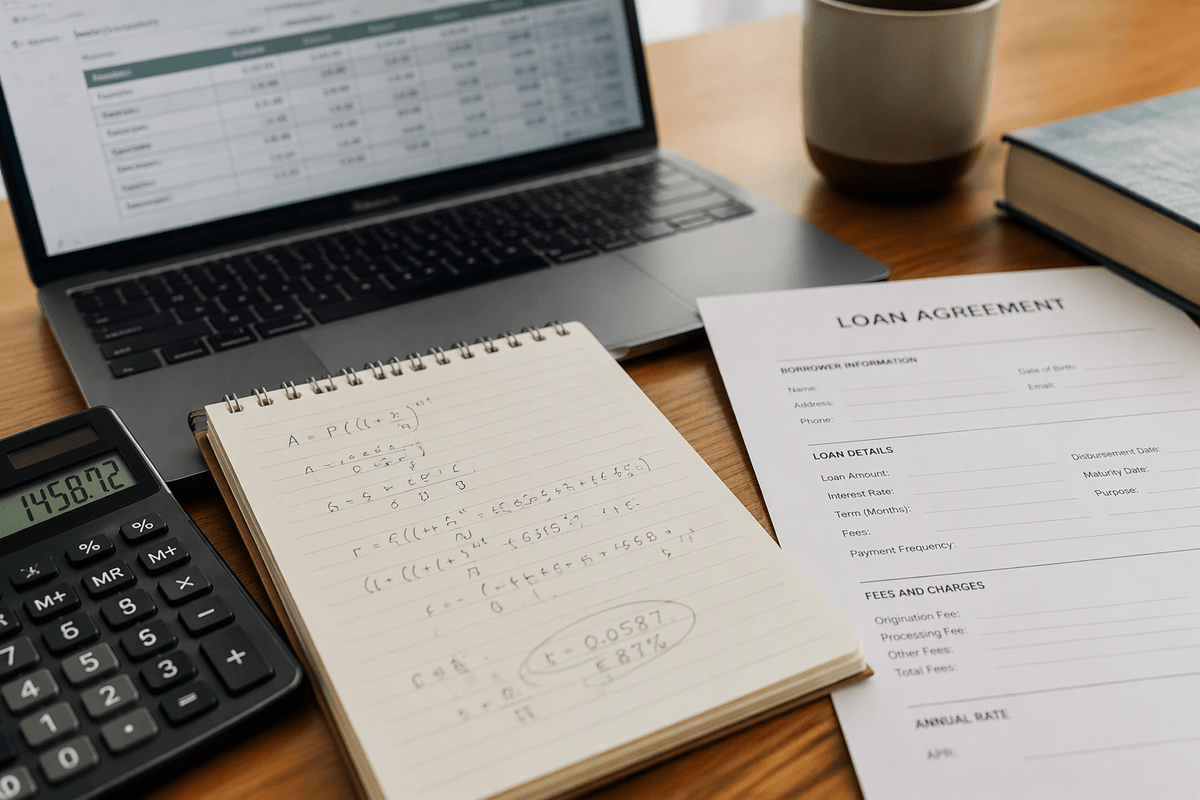
You’re close to picking, but the missing piece is speed. When two offers have similar rates, the fee math can be done in a minute, and it tells you whether the “better rate” is just being prepaid. Take the upfront finance charges you’re sure are in the deal (origination fee, points), and treat them like extra interest spread over the time you expect to keep the loan.
A quick estimate is: fee APR add‑on ≈ (fees ÷ amount financed) ÷ years held. Borrow $20,000 with a 2% origination fee ($400) and expect to keep it 4 years: $400 ÷ $20,000 = 2%; 2% ÷ 4 ≈ 0.50% per year. Add that to the rate as a rough APR. The constraint is holding period: if you refinance in 2 years, that same fee “costs” about 1.0% per year, and the ranking can flip.
The revised way to compare offers confidently
By now the comparison is less about a single “best APR” and more about matching the disclosure math to the way the loan will actually be used. Start with three numbers per offer on one line: the rate, the APR, and the cash you must bring up front (including third‑party costs APR may ignore). Then write the holding period you’re realistically committing to—12 months for a promo balance, 4 years for a car you might trade, 7–10 years for a mortgage you expect to refinance.
From there, pressure‑test one scenario that could go wrong: the promo ends with a balance left, the variable rate rises, or you miss one payment and trigger penalty pricing. If the “bad” scenario is unaffordable, the lowest headline rate was never the real deal.