Trip framing: pace, budget, planning unknowns
I stalled at the same fork most first-timers hit: chase the Masai Mara’s density, add Amboseli for elephants and Kilimanjaro, or keep it simple and actually rest. With five days off work, every “quick” add-on turns into another dawn departure.
Mid-range budgets look fine on paper until you price transfers: driving is cheaper but eats daylight (and patience on rougher stretches), while flying saves hours but can cost as much as a night in a good lodge.
The big unknown is friction—park gates, lodge locations inside vs outside, and how many early starts you can tolerate before the game drives blur together.
Day 1: Nairobi → Masai Mara transfer
At 5:45 a.m., the “we’ll just drive to the Mara” idea felt clean and logical; by 7:00, Nairobi traffic had already turned it into a small negotiation with time. You can do the transfer in a day, but it’s not a quick hop—plan on most of your daylight being spoken for, especially if your driver is also trying to time gate hours and a reasonable lunch stop.
The drive works best when you accept the trade-off: you’re buying budget flexibility with fatigue. You avoid the flight premium and the luggage limits, and you can keep your arrival plans loose if your flight into Nairobi runs late. The downside shows up after Narok, where the road can slow to a crawl, and “arrive for an afternoon game drive” becomes conditional on weather, roadwork, and how far your lodge sits from the gate.
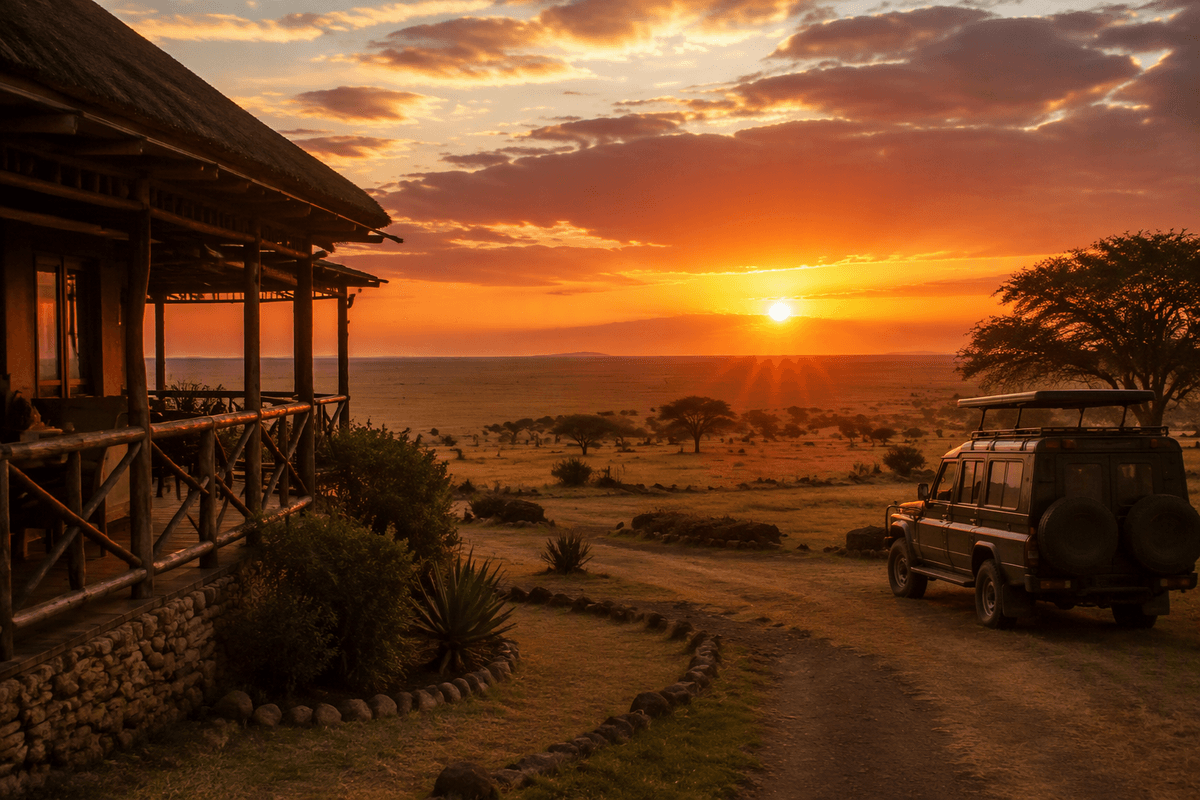
If you’re choosing a mid-range lodge, I’d bias toward one that’s closer to your entry point (even if it’s slightly less atmospheric) for this first night. Day 1 is about getting set up without burning your one chance at a Mara sunset because you’re still bouncing along the last rough stretch.
Day 2: Masai Mara big-cat focus
By the second morning, the main constraint wasn’t wildlife—it was your own tolerance for an early start. We left before sunrise to be in position as the light came up, because big cats don’t wait for a leisurely breakfast. That timing worked: cooler air, fewer vehicles, and a real chance of seeing lions still moving instead of already collapsed into shade.
What didn’t work as well was trying to “cover the whole Mara” from a lodge that sat far from the action. The map makes it tempting to bounce between river crossings and open plains, but the distance adds up in a way you feel in the seat: more driving, less scanning, and a creeping pressure to rush sightings because you’re thinking about the return time. If you’re mid-range and driving in, I’d choose a zone and commit—either the open plains for cheetah visibility or the river areas for lion/leopard potential—rather than ping-ponging all day.
A full-day game drive with packed lunch gives you uninterrupted time, but it’s also the day fatigue sneaks in. If you’re already worn from Day 1’s transfer, split it into morning and late afternoon and accept you’ll miss some midday surprises in exchange for staying sharp when the cats actually show.
Day 3: Mara → Nakuru/Naivasha lakes
The morning you leave the Mara is when the itinerary stops being about wildlife and starts being about math. We tried to squeeze in a short sunrise loop, but every extra ten minutes in the park turns into an hour you’ll feel later—because Day 3 is a transfer day no matter how you dress it up. If your driver says “we’ll be at the lake by lunch,” treat that as best-case with perfect roads and a lodge that’s exactly where you think it is.
You have two clean versions: commit to Lake Nakuru for the compact, high-probability rhino day (and accept the gate/queue friction), or aim for Naivasha if you want a softer landing—boat rides and walking options that don’t require the same intensity as another full game drive. Nakuru works well when you arrive early enough to actually use the afternoon inside the park; it works poorly when you roll in late, pay entry, and realize you’ve bought a rushed two-hour loop.
Our best decision was keeping the lake night close to where we’d start in the morning, even if it meant a less “special” property. Day 4 has its own early start, and the quickest way to ruin Amboseli is to show up already tired of your own schedule.
Day 4: Amboseli elephants and Kilimanjaro views
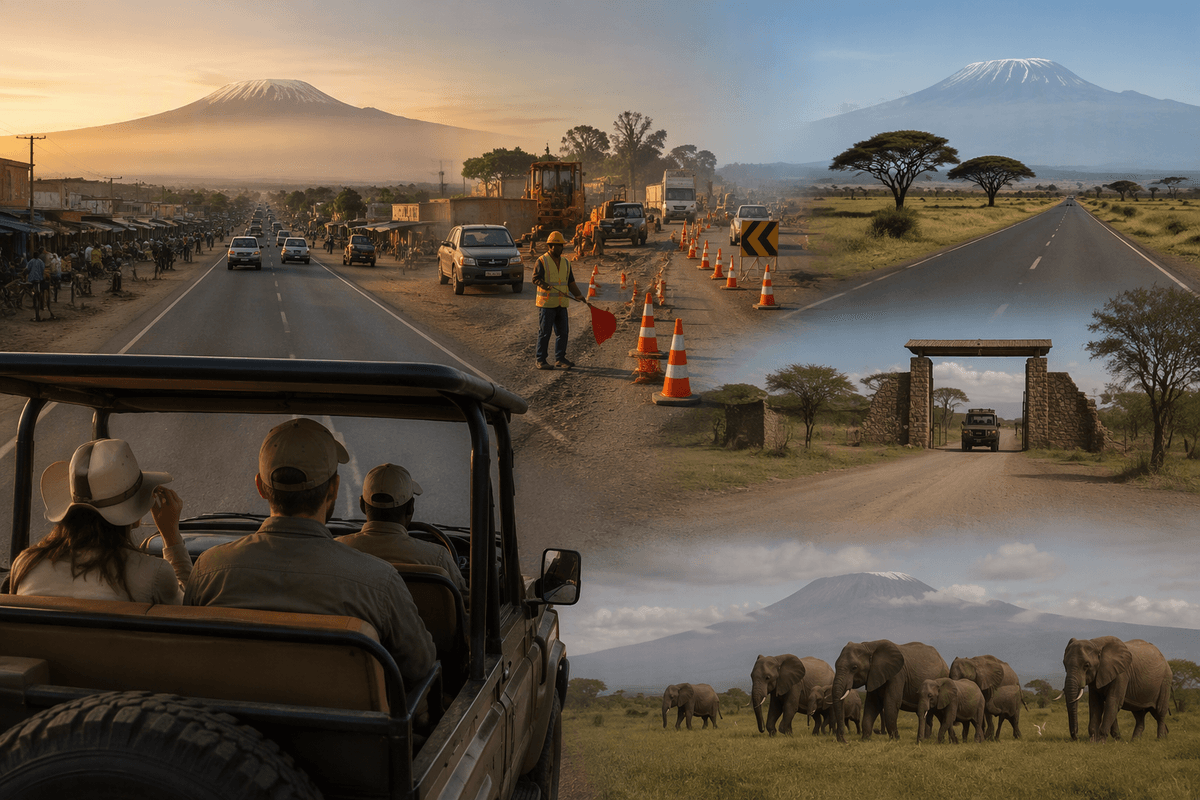
The Day 4 question is whether you’re chasing a postcard or a probability. From the lakes, Amboseli is doable, but it’s another long haul—and arriving mid-afternoon can feel like you paid for “Amboseli” and got mostly highway. We left early, skipped a sit-down breakfast, and still hit small slowdowns around towns and roadworks that turned a neat ETA into a moving target.
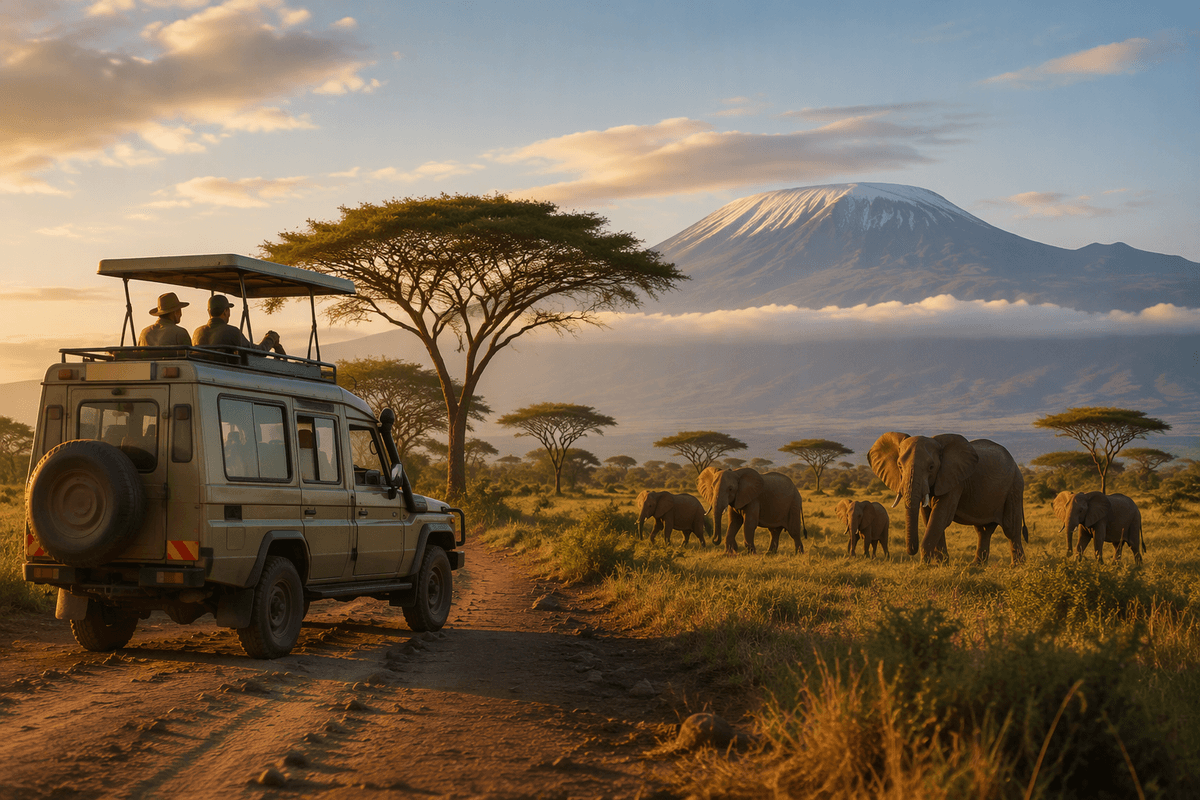
What worked: treating Kilimanjaro as a morning-only bonus. The mountain shows best when the air is cooler and the clouds haven’t built up yet, so I’d rather be at the gate early than “arrive in time for lunch” at the lodge. The elephants, on the other hand, were reliable—big herds, close-range moments, and a landscape that makes it easy to see movement.
What didn’t: over-optimizing for a lodge view. A property with a great terrace is nice, but if it adds distance from the park, you lose the low-stress sunset loop when crowds thicken near the marshes. Choose access over aesthetics on this night.
Day 5: Final game drive + return logistics
Our last morning in Amboseli was the classic temptation: squeeze in one more loop or sleep like a normal person. We went out early—partly for the cooler air, partly because the park feels calmer before the safari vans settle into their predictable circuits. It worked: elephants were already moving, and we got cleaner sightings without the midday dust haze. What didn’t work was trying to “upgrade” the final drive by chasing every radio call; the farther we ranged, the more we watched the clock instead of the animals.
The return logistics are where this itinerary either feels tight-but-smart or simply tight. If you’re driving back to Nairobi for an evening flight, you need a hard cut-off time and the humility to stick to it—roads, town slowdowns, and gate exits don’t care about your boarding time. A mid-range sweet spot is: early game drive, quick brunch, then back on the road with a buffer big enough to absorb a delay without turning the airport into a sprint. If you can afford it, this is the one leg where a short flight (or at least a private transfer) buys back the most sanity.
Close: what you’ll remember and adjust next time
On the flight home, what stuck wasn’t a single “best” sighting—it was how quickly the trip rewards (or punishes) your routing choices. The Mara delivered density and drama; Amboseli delivered scale and elephants with almost unfair consistency. The lakes were the mental reset, but only because we treated them as a softer day instead of pretending they were a full safari stop wedged into a transfer.
If I ran the same five days again, I’d adjust two things. First: I’d pay closer attention to lodge geography over lodge vibes—ten extra kilometers from a gate sounds minor until you’ve stacked three early starts and you’re negotiating every minute. Second: I’d be more honest about what driving costs in daylight. Driving kept the budget sane, but it also turned “optional” game drives into gambles; one rough stretch or slow town and your afternoon loop evaporates. Practical takeaway: pick two anchors (Mara + Amboseli), then design everything else to protect your mornings—because that’s when Kenya feels like it’s cooperating.