What this visit is really trying to accomplish
You might walk in expecting a quick fix—an adjustment, a few stretches, maybe a printout—and instead notice how much time goes to talking and watching you move. That can feel oddly slow when something hurts, especially if your pain has “good days” that make you wonder whether you’re overreacting. But the first visit usually isn’t about finding the single perfect exercise. It’s about figuring out what your body does consistently, even when your symptoms are inconsistent.
A PT evaluation is often trying to connect three things that don’t always line up neatly: what you feel (pain, stiffness, fatigue), what you can do (bend, reach, walk, grip), and what your days demand (sitting, lifting, sleep, commuting). Small details—how long you sit before you shift, which side you avoid turning toward, whether mornings are worse than evenings—help create a starting “baseline.” It won’t be flawless, and it may change as you loosen up or tense up during the exam, but it gives you and your therapist something real to compare against later.
How to prepare without over-optimizing the appointment
The night before, it’s easy to start negotiating with your body: “If I rest all day, will the test look better?” or “If I do my usual workout, will they take me more seriously?” That kind of prepping often backfires. If you arrive unusually stiff from over-resting or unusually sore from proving a point, the session can end up reflecting your experiment rather than your normal pattern.
What tends to help more is simple clarity. Know the rough shape of your week—how much you sit, how you lift, what sleep looks like, where pain shows up first, and what you’ve stopped doing without noticing. If you have imaging reports or a referral note, bring them, but don’t feel you need a perfect timeline. Even a few concrete examples (“stairs feel sketchy by afternoon,” “turning to check my blind spot pinches”) can save time and reduce the pressure to perform.
Why the intake questions can feel surprisingly personal
Halfway through the paperwork, you may notice your answers drifting away from “my knee hurts” and into things you didn’t expect to explain to a stranger: how you sleep, how stressed you’ve been, what your job actually looks like hour to hour, whether you’ve stopped taking walks because it feels risky. It can feel too personal, especially if you came in hoping for a mechanical check and a list of exercises.
But those questions are often less about judging you and more about catching the hidden forces that make symptoms flare or fade. A back that feels “random” sometimes isn’t random—it may track with long meetings, short sleep, or the way you brace when you’re anxious about a sharp twinge. Your memory can be inconsistent, and pain can rewrite the story depending on the day. Offering a few real examples usually helps more than trying to give the perfect explanation.
The movement exam: looking for patterns, not perfection
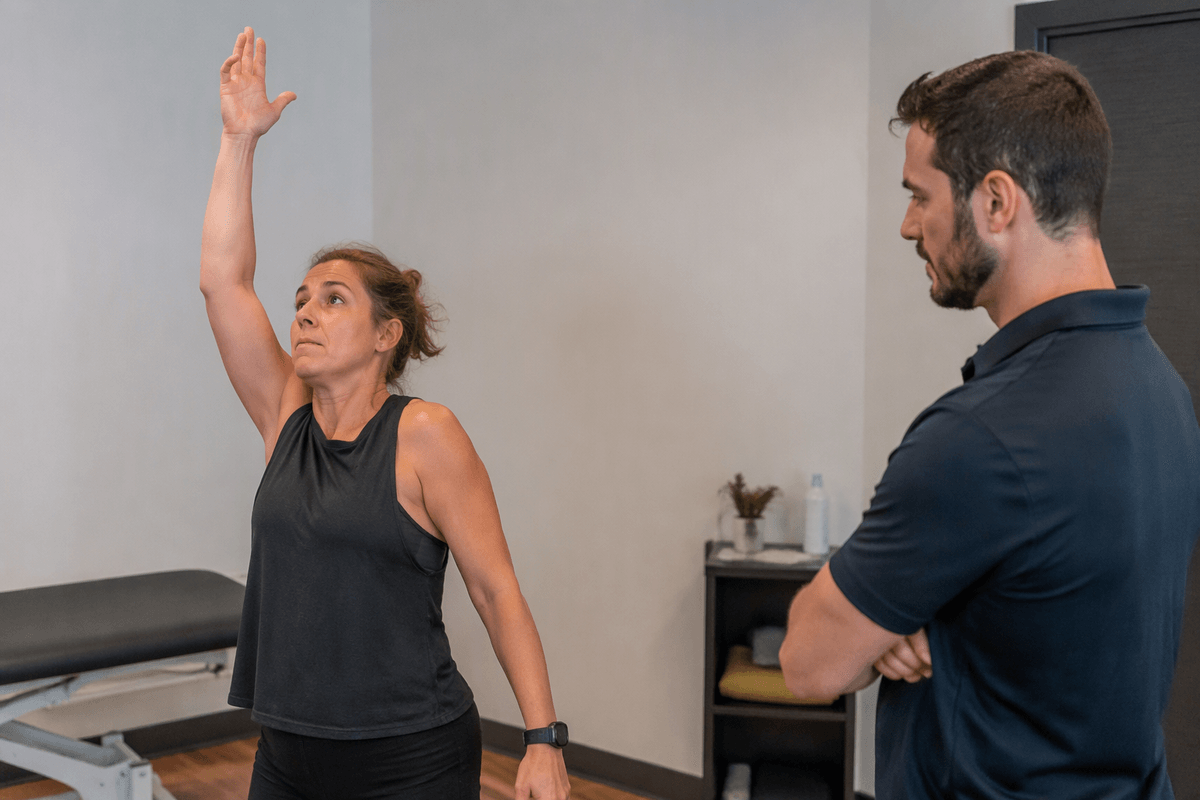
When you stand up to “just show me where it hurts,” the first surprise is how ordinary the movements can be: a few steps, a squat that’s more of a sit-back, a reach overhead, a turn of the head. You might catch yourself trying to do it the “right” way—bracing your core, moving slowly, holding your breath—because you don’t want to look weak or dramatic. That’s normal, and it can also make the exam feel inconsistent, especially if one repetition feels fine and the next feels sharp for no obvious reason.
Most of what the therapist is watching isn’t a pass/fail test. They’re noticing what changes your movement: where you hesitate, which side does more work, whether you shift weight early, and what happens when you repeat a motion or add a small cue. Sometimes the awkward part is that you can “perform” a movement once, but your body can’t repeat it comfortably—fatigue, guarding, and habit show up fast. Those small patterns often become the first clues for what to adjust later.
When a reasonable choice creates unexpected confusion
Somewhere near the end of the exam, you may be offered a choice that sounds completely reasonable: “Does it feel better if you tighten your stomach?” or “Try turning your foot out a little.” And it might work—immediately. You leave thinking you’ve found the fix, then notice the same move feels different in your car, at your desk, or the next morning when you’re rushed and not paying attention. It can start to feel like you did the test “wrong,” even though nothing went off the rails.
Often the issue is that the better version took extra focus, a slower pace, or a slightly different setup that’s hard to recreate in real life. A cue can change pain quickly without being sustainable yet, and a position that calms symptoms for one rep can feel too stiff or tiring by the tenth. That mismatch—between what works in the clinic and what holds up in your day—is usually the first useful data point, not a failure.
Your first plan often feels too easy or too specific
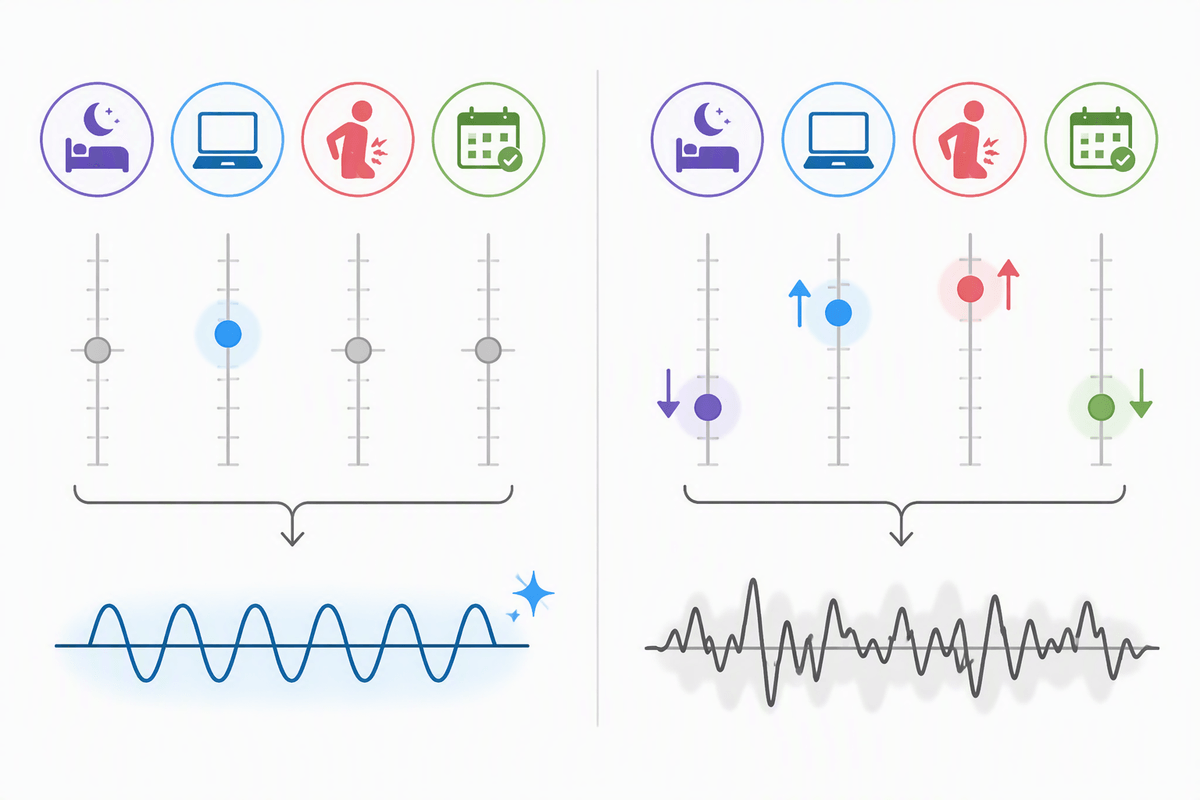
Later that day, you might stare at the handout and feel a weird mix of relief and doubt. Two exercises. A short walk. “That’s it?” If you expected a complicated routine, a simple plan can feel like you’re being brushed off—or like it couldn’t possibly touch pain that’s been interrupting sleep and work. But early plans are often deliberately small because your first job isn’t fitness; it’s collecting a clear signal. If you change ten things at once, it gets hard to tell whether you’re improving, flaring, or just reacting to a busy week.
On the other end, the plan can feel almost too specific: a certain height of pillow, a particular way to hinge, a cue you can’t remember once you’re carrying groceries. In the clinic, it may feel clean and repeatable; at home, real life adds speed, distraction, and awkward angles. That doesn’t mean you “failed” the program—it may just mean the plan is still being translated into your day.
After the visit: normal reactions and next-step choices
That first evening, you might notice two competing messages from your body: a small sense of looseness in one direction, and an unfamiliar ache in another. It can feel like a setback—especially if the clinic movements felt gentle—but new loading can bring on delayed soreness, or your system may stay a little “on guard” after being tested. The soreness doesn’t always show up where your original pain lives, and the next morning can look different again once you’ve slept, commuted, and sat through meetings.
What usually matters is the pattern more than the intensity. If the exercises reliably ease things after you do them, even briefly, that’s a useful sign. If the same steps repeatedly spike symptoms for hours, or you start avoiding normal tasks because you don’t trust the response, that’s also useful information—not something to hide at the next visit. Most early “next steps” are small: keep the plan steady long enough to read the signal, then bring back specific examples so the plan can be adjusted to your real week.